

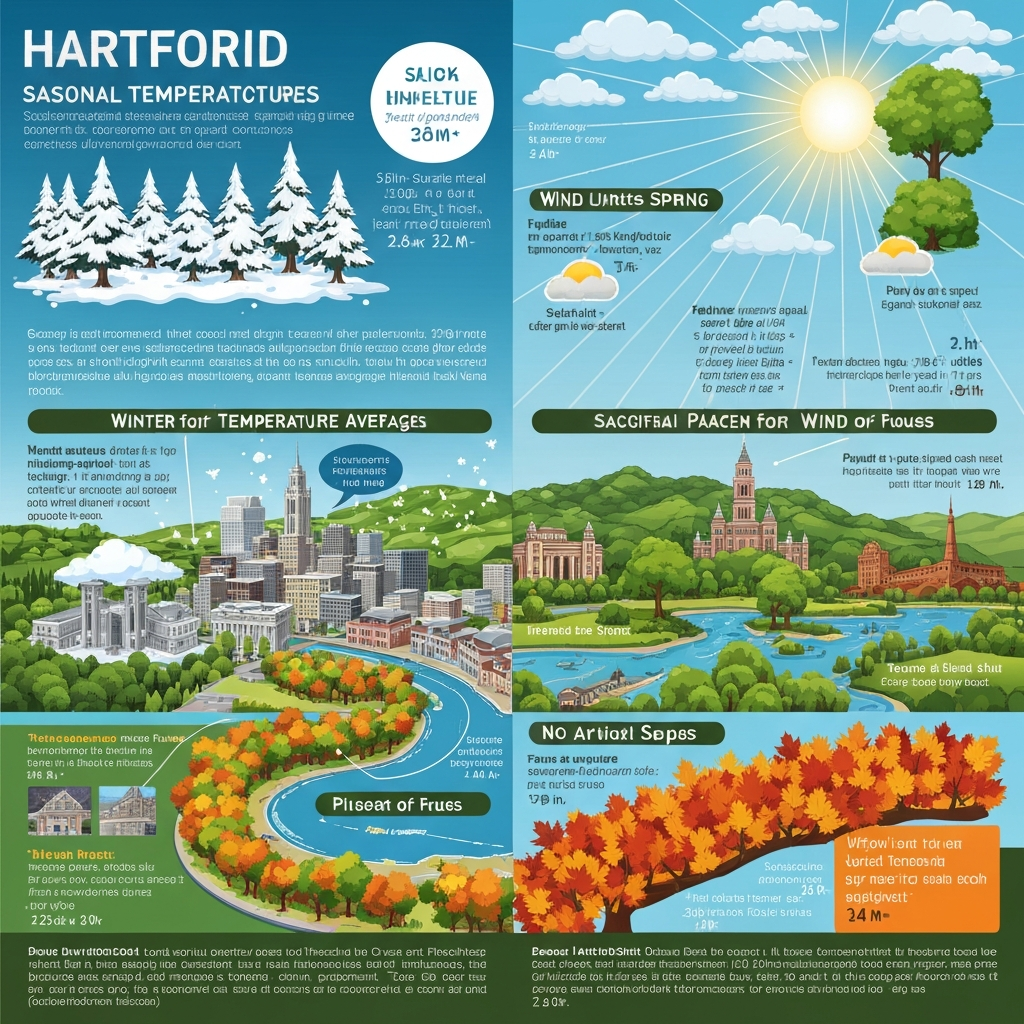
Hartford, Connecticut, experiences a humid continental climate, characterized by four distinct seasons: cold winters, warm summers, and transitional periods in spring and fall.
Winter
Winters in Hartford are cold, with average high temperatures ranging from 33.1°F (0.6°C) to 38.5°F (3.6°C). January is typically the coldest month, with nighttime temperatures dropping as low as 21.4°F (-5.9°C). Snowfall is common, averaging about 30 inches annually, which significantly impacts local activities and transportation.
Spring
Spring brings a gradual warming trend. March sees average temperatures near 40°F (4°C), reaching into the 60s by May. This season encourages outdoor festivals and landscaping activities as residents shake off the winter chill.
Summer
Summers are warm and humid, with average highs in July reaching around 85°F (29°C). The humidity can make the heat feel more intense, prompting both locals and tourists to seek relief in parks and along the Connecticut River.
Fall
Autumn is marked by cooler temperatures and vibrant foliage. September starts out warm in the 70s, but by November, highs are in the 50s and lows start flirting with freezing.
Climate Change Impacts
Recent data indicates that Hartford is experiencing increased risks from climate change, particularly in terms of precipitation and heat. The city’s precipitation risk is rated as extreme, and heat risk is very high. About 19% of buildings in Hartford are at risk of flooding, with the risk level for these buildings being significant.
Understanding these seasonal patterns and the ongoing impacts of climate change is essential for residents and visitors to prepare and adapt to Hartford’s evolving climate.