

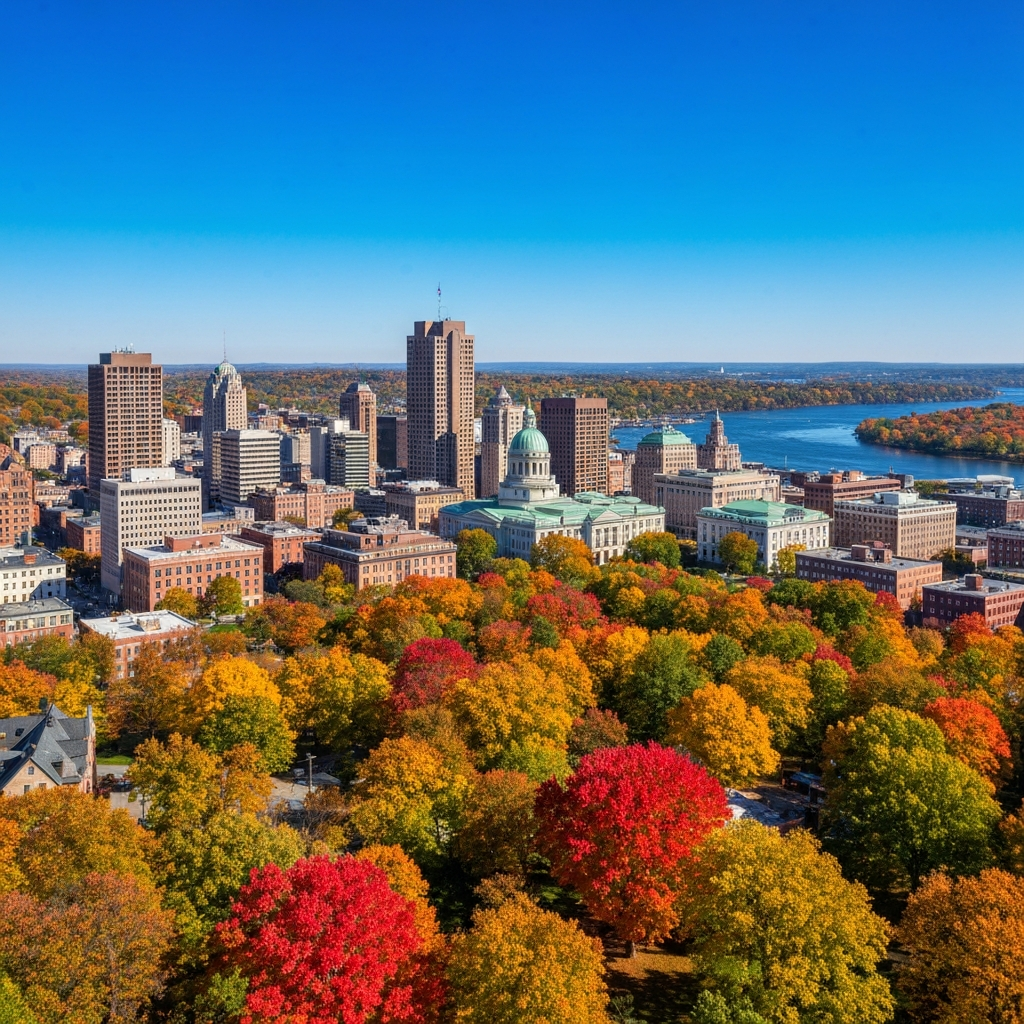
Hartford, Connecticut, experiences four distinct seasons, each bringing its own unique weather patterns and challenges. Understanding these seasonal variations can help residents and visitors prepare accordingly.
Spring: A Gradual Warm-Up
Spring in Hartford typically begins in March, with temperatures gradually rising from the 40s°F (4-9°C) to the 60s°F (15-20°C) by May. This season is characterized by increasing daylight and blooming flora, making it a pleasant time for outdoor activities. However, spring can also bring unpredictable weather, including occasional rain showers and fluctuating temperatures.
Summer: Warm and Humid
Summers in Hartford are warm and humid, with average high temperatures in July reaching around 84°F (29°C). The city experiences approximately 17 days per year where temperatures exceed 90°F (32°C). Thunderstorms are common during this season, often providing brief but intense rainfall. Residents should be prepared for high humidity levels and the possibility of sudden weather changes.
Autumn: Crisp and Colorful
Autumn brings cooler temperatures and vibrant foliage to Hartford. September starts with average highs in the 70s°F (21-26°C), gradually decreasing to the 50s°F (10-15°C) by November. This season is generally dry, offering comfortable conditions for outdoor activities and enjoying the fall colors.
Winter: Cold and Snowy
Winters in Hartford are cold, with average low temperatures in January around 18°F (-8°C). The city receives an average of 38 inches (97 cm) of snow annually, with the heaviest snowfall typically occurring in February. Residents should be prepared for freezing temperatures and the potential for significant snow accumulation, which can impact travel and daily activities.
By understanding these seasonal patterns, Hartford residents can better prepare for the weather conditions each season brings, ensuring safety and comfort throughout the year.